

The Siberian cat is often described as a national treasure of Russia, combining raw power with a heart of gold. For centuries, these majestic animals roamed the snowy forests and guarded monasteries, evolving into one of the sturdiest and most intelligent breeds in existence. Today, they are beloved worldwide not just for their stunning looks, but for a unique biological trait that fascinates scientists and allergy sufferers alike. At Meowly, we believe that understanding the deep history and biology of this breed is essential for anyone considering welcoming one into their home.
Owning a Siberian cat is a bit like living with a piece of living history. Unlike many modern breeds that were created by humans through selective breeding, the Siberian is a “landrace” variety. This means they developed naturally in the harsh climate of Siberia, adapting over hundreds of years to survive in sub-zero temperatures. This natural evolution has gifted them with robust health, high intelligence, and a coat that is a marvel of biological engineering. Whether you are a student researching feline genetics or a family looking for a playful companion, this breed offers a depth of character that is hard to match.
A History Written in Snow
The history of the Siberian cat dates back at least a thousand years, though they were relatively unknown to the rest of the world until the fall of the Iron Curtain. In Russian folklore, they are depicted as protectors of the home and magical guides to the spirit world. They were prized by farmers for their incredible hunting abilities, keeping grain stores free of rodents, and by monks who valued their quiet companionship and ability to patrol the monastery grounds.
For students of history, the breed’s timeline is interesting because it runs parallel to the development of human settlements in Russia. They were not strictly “pets” in the modern sense but working partners. It wasn’t until the 1990s that the breed was officially imported to the United States and recognized by major cat associations. Despite their late arrival to the western show ring, they quickly skyrocketed in popularity due to their winning personalities and rugged beauty.
The Science of the “Hypoallergenic” Coat
One of the most discussed topics regarding this breed is its reputation for being hypoallergenic. For biology students and allergy sufferers, it is important to understand the science behind this claim, as no cat is truly 100% non-allergenic.
The Fel d 1 Protein
Most people who are allergic to cats are not allergic to the fur itself, but to a protein called Fel d 1. This protein is found in the cat’s saliva, skin oils (sebum), and urine. When a cat grooms itself, the saliva dries on the fur and becomes an airborne allergen.
Research has shown that the Siberian cat produces significantly lower levels of the Fel d 1 protein compared to other breeds. While an average cat might produce high levels of this allergen, many Siberians have mutations that limit its production. This is why many people with mild to moderate allergies find they can live happily with a Siberian. However, it is crucial to note that allergen levels vary from cat to cat. There is no guarantee that every kitten will be low-allergen, which is why reputable breeders often test their breeding stock for protein levels.
Physical Characteristics: Built for Survival
Every physical trait of the Siberian cat serves a purpose derived from its origins in a freezing climate. They are medium to large cats, often taking up to five years to reach full maturity. This slow development is typical of larger breeds, allowing their bone structure to develop the necessary density to support their muscular frames.
The Triple Coat
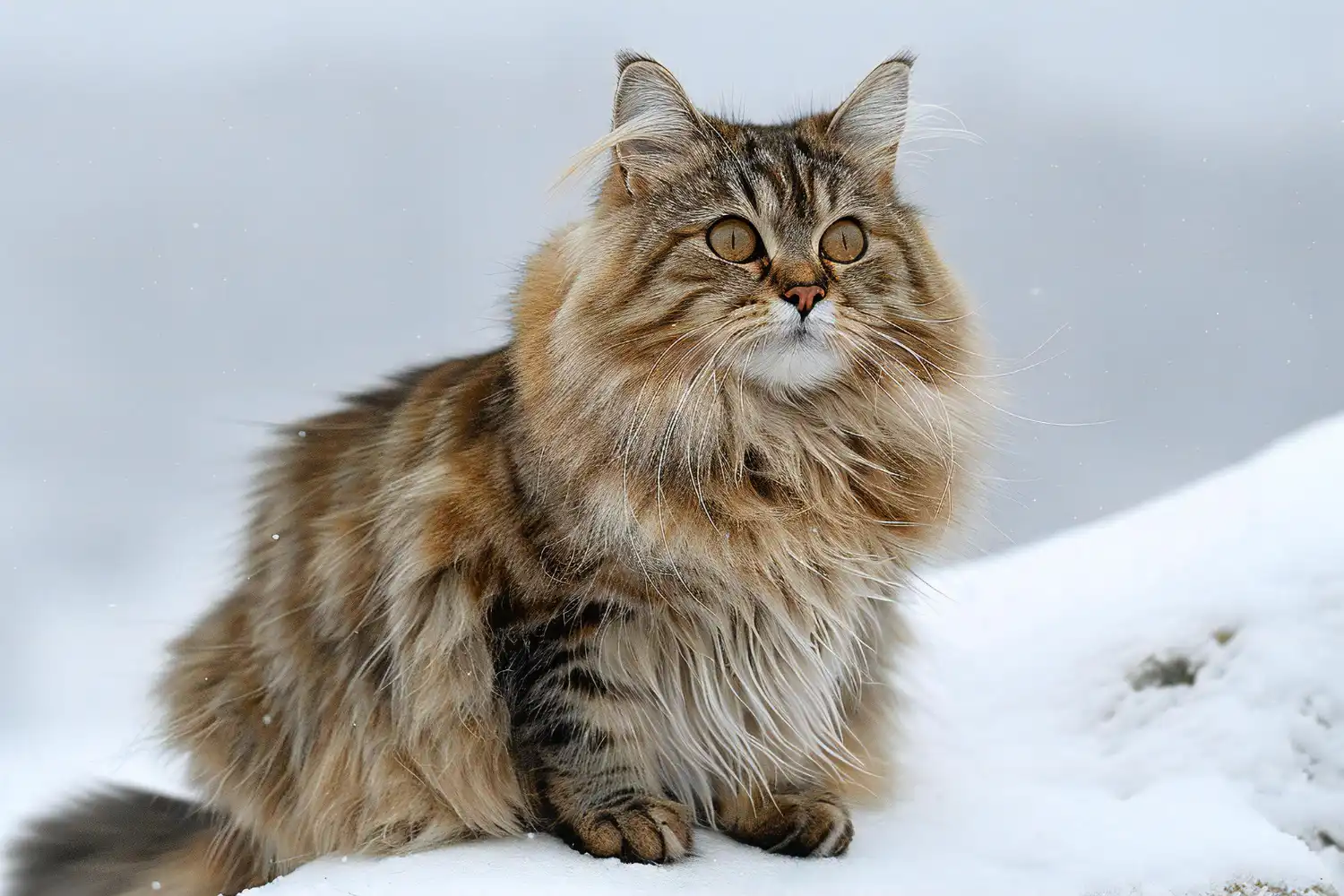
To survive the Siberian winter, these cats developed a unique triple coat.
- Guard Hairs: The outer layer consists of coarse, water-resistant guard hairs. These protect the cat from snow and moisture.
- Awn Hairs: The middle layer provides a buffer and adds texture.
- Downy Undercoat: The bottom layer is incredibly dense and soft, trapping body heat against the skin.
This coat thickens significantly in the winter, complete with a magnificent full ruff around the neck (resembling a lion’s mane) and “britches” on the hind legs. In the summer, they shed much of this heavy coat to prevent overheating, looking almost like a different cat during the warmer months.
Agility and Strength
Despite their heavy appearance, they are exceptionally agile. Their hind legs are slightly longer than their front legs, giving them an arched back. This structural advantage allows them to make incredible leaps. In the wild, this helped them navigate deep snow and catch prey; in your living room, it means they can easily jump to the top of the refrigerator or high bookshelves with barely a sound.
Temperament: The Dog-Like Cat
If you ask a Siberian owner to describe their pet’s personality, “dog-like” is almost always the first adjective used. These are not aloof creatures. They are incredibly social, problem-solving animals that form deep bonds with their human families.
Social Intelligence
Siberians are known to follow their owners from room to room. They want to be where the action is. They are famously good with children and other pets, including dogs, largely due to their high confidence and low reactivity. They are rarely skittish; instead, they approach new situations with a cautious curiosity.
Playfulness and Water
Their playfulness extends well into adulthood. They are one of the few cat breeds that genuinely enjoy playing fetch and will often bring their favorite toys to their owners to initiate a game. Furthermore, many Siberians retain a fascination with water. Do not be surprised if your Siberian tries to join you in the shower, paws at the water dish, or watches the toilet flush with intense concentration. This affinity for water is likely a remnant of their ancestors who fished in the streams of Siberia.
Care and Maintenance
While they are a natural breed and generally robust, caring for a Siberian cat requires dedication, particularly regarding their coat.
Grooming Requirements
The triple coat is beautiful, but it requires maintenance. During the shedding seasons (spring and autumn), daily brushing is essential to remove the dead undercoat. If this loose fur is not removed, it can cause painful mats close to the skin. During the rest of the year, a thorough brushing once or twice a week is usually sufficient.
For students studying animal care, it is worth noting that despite the volume of fur, their coat has a slightly oily texture that makes it somewhat resistant to matting compared to drier coats like that of the Persian. However, this oiliness means that some Siberians may need occasional baths to keep their skin healthy, especially if they are strictly indoor cats.
Dietary Needs
As active, muscular predators, Siberians need a high-protein diet. They are substantial cats, with males weighing between 15 to 20 pounds, and they require high-quality fuel to maintain their muscle mass. A diet rich in meat (wet food or raw food) is often recommended over dry kibble, which can be high in carbohydrates that these cats do not process well.
Health and Longevity
The Siberian cat is generally a very healthy breed, thanks to its natural development and a large gene pool. They are known to be long-lived, often reaching 15 to 18 years or more.
However, like many large breeds, they can be prone to Hypertrophic Cardiomyopathy (HCM), a form of heart disease. This is why it is vital to choose a breeder who screens their cats for heart health. Regular veterinary check-ups and keeping the cat at a healthy weight are the best ways to ensure a long life.
Conclusion
The Siberian cat is a remarkable blend of wild heritage and domestic affection. They offer the best of both worlds: the beauty and independence of a forest predator combined with the loyalty and playfulness of a devoted companion. For the student, they are a lesson in evolutionary biology and genetics; for the owner, they are a warm, purring presence that turns a house into a home.
If you are ready for a pet that will challenge your intellect, warm your lap, and perhaps even play a game of fetch, the Siberian might just be the perfect addition to your life. At Meowly, we celebrate this magnificent breed and the unique joy they bring to families around the world.