


The Cheshire cat is arguably the most famous feline in literary history, known worldwide for its mischievous grin and the ability to disappear at will, leaving only its smile behind. While most people instantly recognize this character from Lewis Carroll’s Alice’s Adventures in Wonderland, the origins and cultural impact of this enigmatic creature go far deeper than a children’s story. For cat lovers and students of history alike, unravelling the mystery behind this grinning phantom offers a fascinating look into folklore, breed history, and even quantum physics.
When we talk about the Cheshire cat today, we are often bridging the gap between fantasy and reality. Is there a real cat breed that inspired the character? Where did the idiom come from? Why do we associate grinning with cats at all? At Meowly, we believe that understanding the lore behind our favorite animals enriches the experience of owning them. Whether you are looking for the real-life version of this character or writing a paper on literary symbolism, this guide covers every angle of the mystery.
The Origins of the Famous Grin
Long before Lewis Carroll penned his famous novel in 1865, the phrase “grinning like a Cheshire cat” was already in use in England. The history of this idiom is debated by etymologists and historians, providing excellent material for anyone interested in linguistics or folklore.
The Cheese Theory
One of the most popular theories dates back to the traditional cheese-making history of the county of Cheshire in England. It is said that local dairies sold cheese molded in the shape of a grinning cat. These cheese cats were eaten from the tail end first, meaning the last part of the cheese to be consumed was the grinning head. This imagery perfectly parallels the way the character disappears in the book, fading away until only the face remains.
The Heraldic Theory
Another historical explanation involves a sign painter in the region. The lion was a common symbol in heraldry, particularly for noble families in Cheshire. However, local sign painters were not always familiar with what a lion actually looked like. Consequently, the lions painted on inn signs often looked more like smiling domestic cats than ferocious beasts. These “grinning lions” became a local staple, eventually evolving into the colloquialism we know today.
Lewis Carroll and the Literary Icon
While the phrase existed previously, it was Lewis Carroll who immortalized the Cheshire cat as a character with a distinct personality and philosophy. In the novel, the cat belongs to the Duchess but interacts primarily with Alice, serving as a chaotic neutral guide through the madness of Wonderland.
A Guide to Madness
For students of literature and psychology, the cat represents a unique form of sanity within insanity. While other characters in Wonderland are bound by their specific obsessions or illogical rules, the cat operates outside of these constraints. He is the only character who admits that everyone in Wonderland is mad, including himself. This self-awareness makes him an observer rather than just a participant, a trait often attributed to real domestic cats who watch household activities from a high perch.
The Power of Invisibility
The cat’s ability to vanish is not just a magic trick; it is a narrative device that emphasizes his detachment. He can appear to offer advice—often cryptic or philosophical—and disappear when the conversation becomes boring or dangerous. This behavior resonates deeply with cat owners, who know that felines often seem to materialize out of nowhere when they want attention and vanish completely when it is time to go to the vet.
The Real-Life Inspiration: The British Shorthair
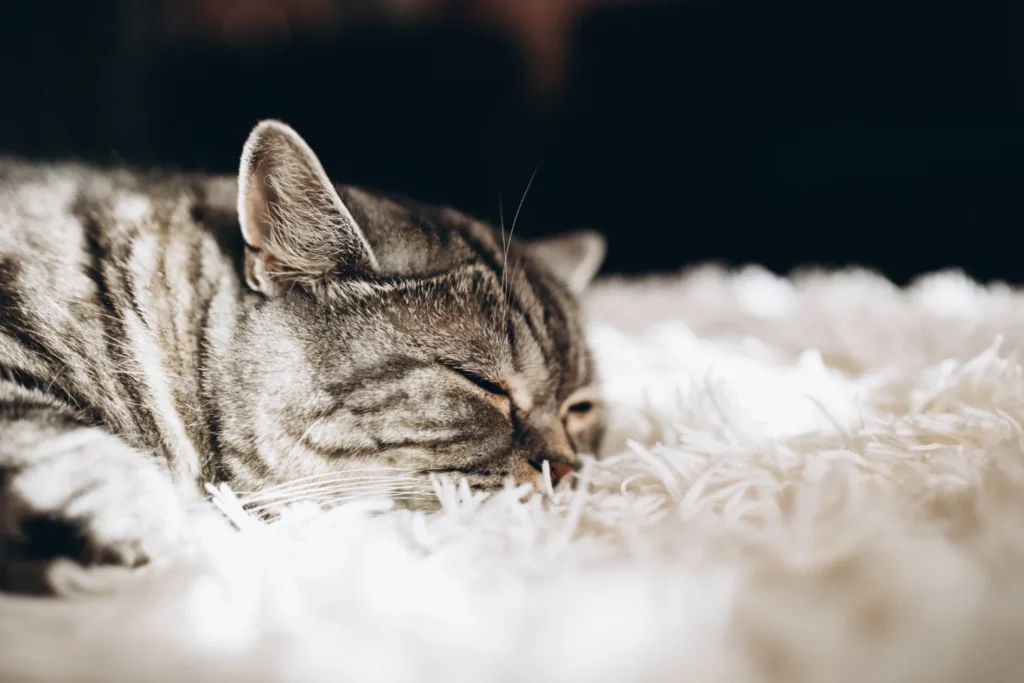
If you want to own a real-life Cheshire cat, the British Shorthair is widely considered the breed that inspired the illustration. Sir John Tenniel, who illustrated the original book, likely based his drawings on this sturdy, round-faced breed which was common in Victorian England.
Physical Resemblance
The British Shorthair is famous for its “teddy bear” appearance. They have broad chests, thick fur, and most importantly, massive round heads with full cheeks. This facial structure gives them a natural, permanent smile. When a British Shorthair looks up at you with its large, copper or gold eyes and chubby cheeks, it is easy to see exactly what Tenniel was drawing. Their coat is dense and plush, often described as crisp to the touch, and the classic blue (grey) color is the most recognized, though they come in many patterns.
Temperament and Personality
Much like the literary character, the British Shorthair is known for being calm, observant, and slightly independent. They are not typically lap cats that demand constant physical contact; instead, they prefer to sit beside their owners or supervise the room from a comfortable distance. They possess a quiet intelligence and dignity, rarely getting flustered. They are affectionate companions but on their own terms, maintaining an air of mystery that befits their literary counterpart.
The Cheshire Cat in Science
The influence of this character extends far beyond literature and pet keeping. The concept of a cat separating from its grin has been used to explain complex scientific phenomena, making this topic particularly interesting for science students.
The Quantum Cheshire Cat
In quantum physics, the “Quantum Cheshire Cat” is a paradox that suggests a particle (like a photon or neutron) can be separated from its physical properties. Just as the cat vanishes but leaves its grin, a particle can effectively go one way while its magnetic moment (its “grin”) goes another. This concept challenges our fundamental understanding of reality and matter, using the famous feline as a metaphor to make high-level physics slightly more accessible.
The Cheshire Cat Effect in Vision
There is also a visual illusion known as the “Cheshire Cat effect” in the field of binocular rivalry. This experiment involves using a mirror to make an object disappear from your field of vision when you look at a plain background with one eye and a moving object with the other. Your brain prioritizes the motion, causing the stationary object to fade away. It is a practical demonstration of how our brains process visual information and ignore details deemed unnecessary.
Caring for a British Shorthair
If you decide to bring a “real” Cheshire cat into your home, you should know that the British Shorthair is a relatively low-maintenance but specific breed.
Grooming Requirements
Despite their plush coat, they do not require hours of grooming. Their fur is short and dense, so a weekly brushing is usually sufficient to remove loose hair and prevent furballs. However, because they are a heavy-boned and muscular breed, they are prone to obesity. Their natural tendency to be inactive (much like the cat sitting in the tree) means owners must monitor their diet carefully.
Health Considerations
British Shorthairs are generally healthy, but like all purebred cats, they have genetic predispositions. Hypertrophic cardiomyopathy (HCM), a heart condition, is something to watch for. Responsible breeders will screen for this. Their stocky build also puts pressure on their joints, so keeping them at a healthy weight is the most important thing an owner can do to ensure a long life.
Why the Legend Endures
The Cheshire cat remains a cultural icon because it perfectly encapsulates the dual nature of felines. They are comforting yet unsettling, present yet distant, affectionate yet independent. Whether you are analyzing the text of Alice in Wonderland, studying quantum mechanics, or simply petting your British Shorthair on the sofa, the legacy of the grinning cat is ever-present.
At Meowly, we celebrate this intersection of culture and nature. The next time your own cat stares at something you cannot see or offers you a slow blink from across the room, remember that they are part of a long lineage of mysterious creatures that have fascinated humanity for centuries. The grin might be metaphorical, but the magic of the bond between human and cat is very real.
Final Thoughts for Enthusiasts
For those looking to adopt a cat with the spirit of the Cheshire, look for breeds that are confident and independent. While the British Shorthair is the visual match, other intelligent breeds like the Russian Blue or the Chartreux also share that observant, quiet dignity.
Remember that the character teaches us an important lesson about direction and purpose. When Alice asks the cat which way she ought to go, he replies that it depends a good deal on where she wants to get to. This is excellent advice for pet owners and students alike: define your goals, whether it is raising a happy pet or acing your exams, and the path will become clear even if it disappears and reappears along the way.